English
The Windows© PhaethonFRP© console application (Windows© 64-bit Binaries) allows the user to evaluate the contribution of fiber-reinforced polymer (FRP) jacket reinforcement to the total compressive strength and ductility of a reinforced concrete (RC) column (circular or rectangular) in terms of axial stress and axial strain, taking into account the failure of the FRP jacket in each case.
DOWNLOAD PhaethonFRPAlternative Sources: Researchgate »
Fiber-reinforced polymer (FRP) jackets for retrofit of reinforced concrete (RC) columns have proven to be a highly effective technique for reducing the seismic vulnerability of structures.
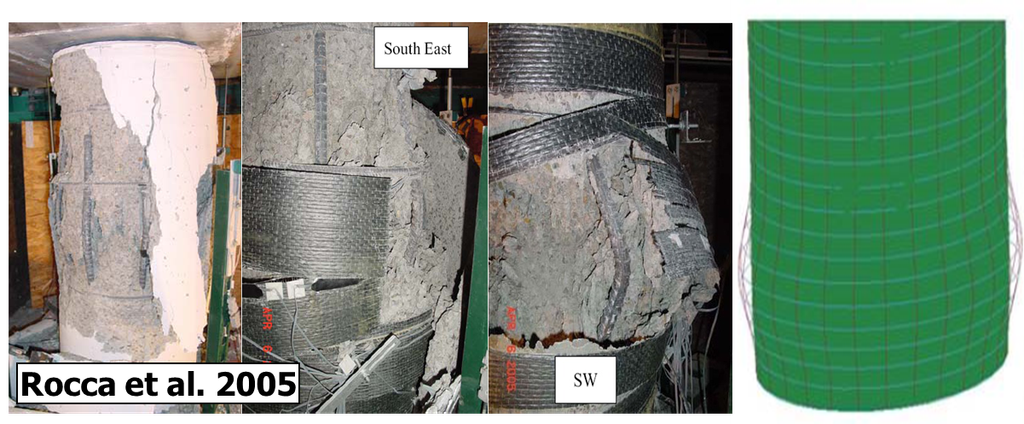
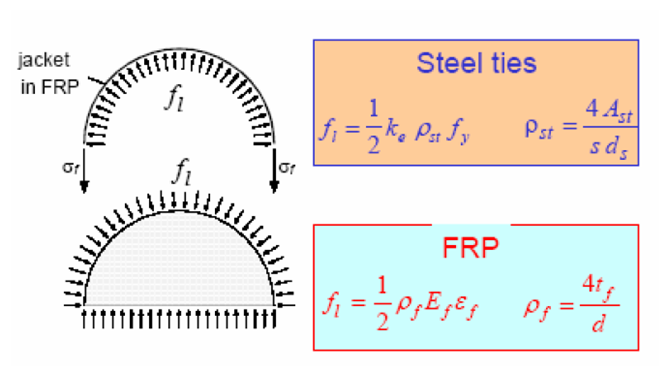
Most constitutive models of the compressive strength of confined concrete in circular cross-sections in the literature take into account the increase in strength and ductility provided by the FRP jacket while ignoring the existing steel reinforcement in the section of the column. Even if the existing reinforcement in a circular cross-section of a RC column is insufficient to confine the core of the cross-section, it nevertheless contributes, together with the FRP jacket, to the confinement of the cross-section. For this reason, the constitutive law proposed by the International Federation for Structural Concrete (fib) was modified to take into account for the influence of the existing steel reinforcement along with the FRP jacket on confinement while strengthening of a circular RC column with FRP jacket.
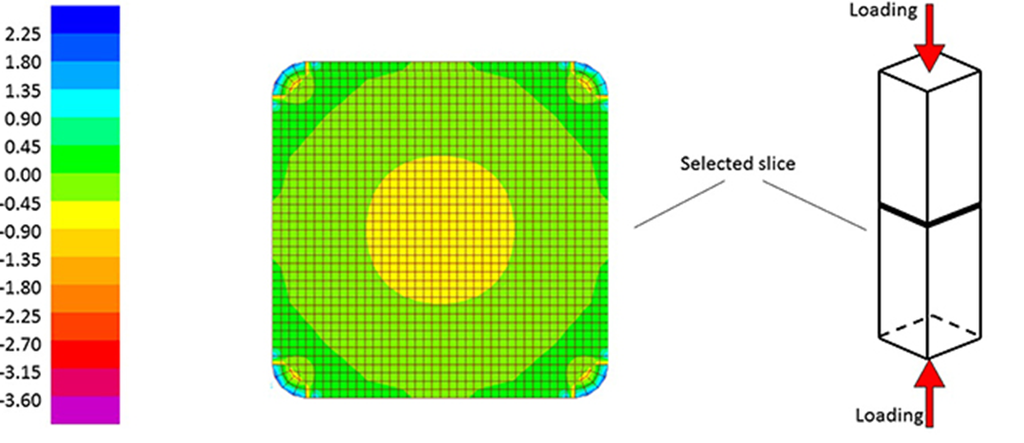
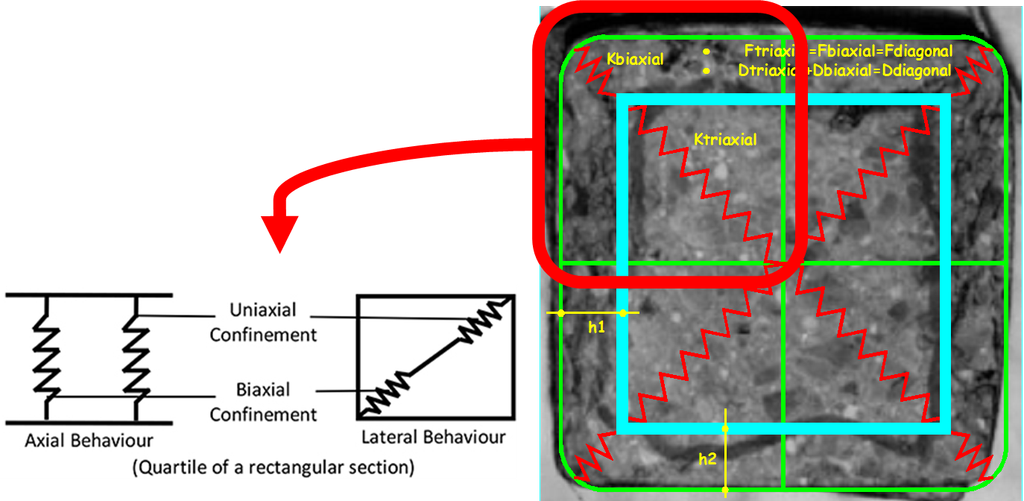
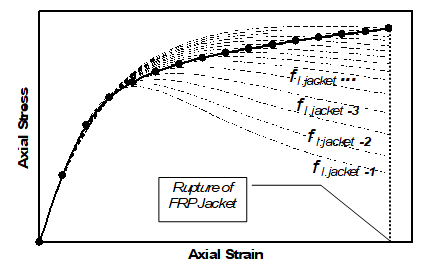
For rectangular RC columns, a material model was developed that starts with the definition of an axial deformation step and, through an iterative process, calculates the corresponding concrete axial stresses. It has been observed that in rectangular RC columns confined with FRP jackets, there are no regions that behave as unconfined, as assumed by various models that adopt the assumption of confinement solely by steel transverse reinforcement. In contrast, in the regions near the FRP confining jacket, the confinement stresses due to the jacket are applied primarily in one direction. Consequently, these regions are not unconfined but are subject to biaxial compression stress state rather than triaxial compression stress state, as is the case in the core of the rectangular cross-section. The model developed for rectangular cross-sections therefore considers two regions within the cross-section: (a) a region of triaxial compression stress state (core) and (b) a region of biaxial compression stress state (surrounding the core). Thus, it calculates the two axial stresses for each region, respectively, and then the average axial stress applied to the entire rectangular cross-section of the RC column.
The PhaethonFRP© console application incorporates the above iterative procedures for circular and rectangular RC columns retrofited with FRP jackets under compression, enabling the user to evaluate the contribution of the FRP jacket reinforcement to the total compressive strength and the ductility of the RC column in terms of axial stress and axial strain, taking into account the failure of the FRP jacket in each case.
Unconfined vs. FRPConfined